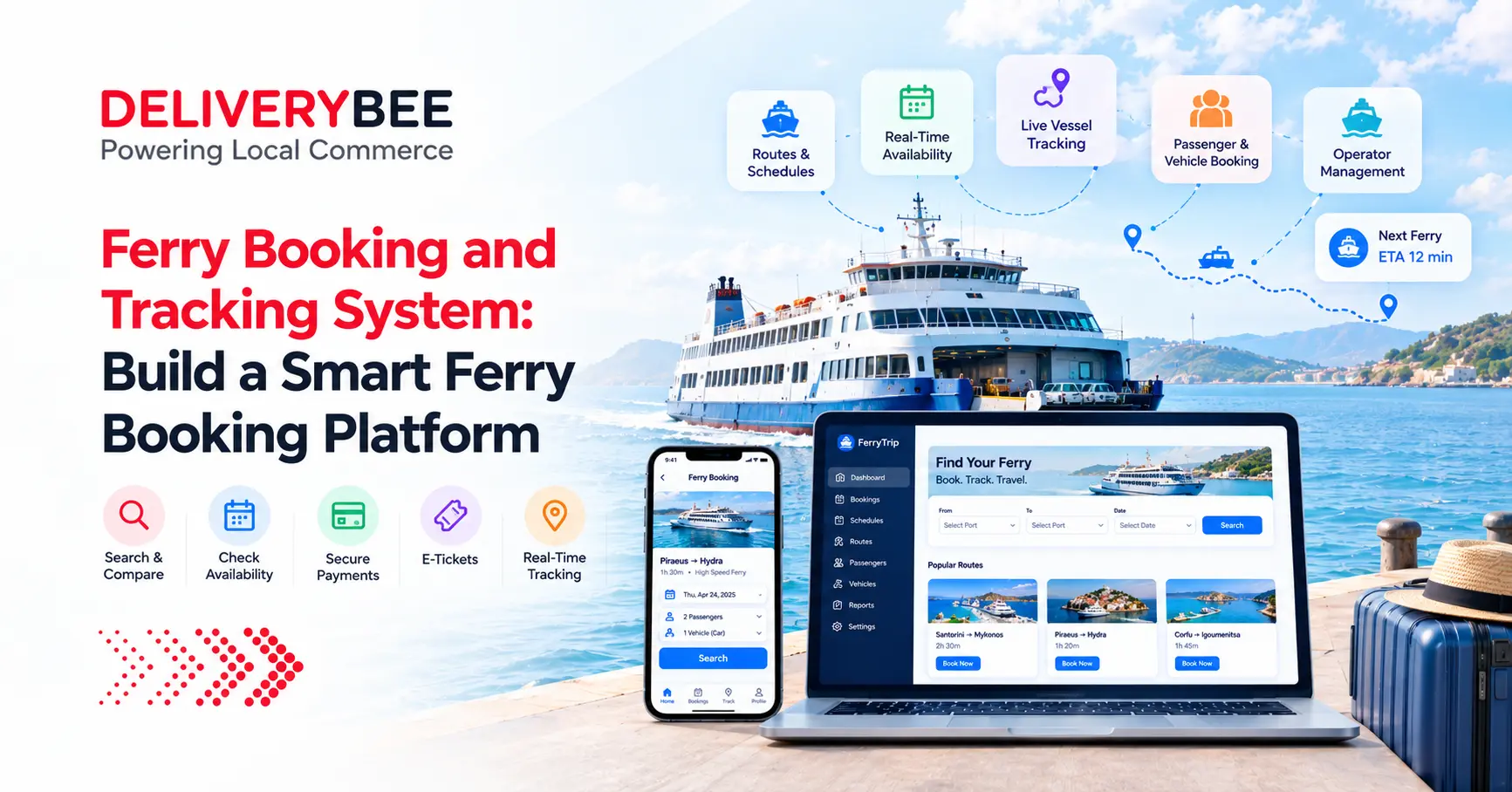
The ferry industry is becoming increasingly digital as passengers expect the same convenience from ferry travel that they already experience with flights, hotels, taxis, and other online transportation services. Searching for ferry routes, comparing schedules, checking availability, making payments, receiving e-tickets, and tracking a ferry should no longer require multiple websites or manual communication.
A modern ferry booking and tracking system brings these activities together through a single digital platform.
For ferry operators, travel agencies, online travel companies, and transportation businesses, a ferry booking system can centralize schedules, routes, passenger information, vehicle bookings, payments, ticketing, and customer communication. With the right ferry booking API, businesses can also connect their platform with multiple ferry operators and access real-time schedules, availability, fares, and booking information.
Businesses looking to build a similar transportation marketplace can also explore technology platforms such as DeliveryBee, which provides a foundation for building customized booking, delivery, logistics, and on-demand digital platforms.
What Is a Ferry Booking and Tracking System?
A ferry booking and tracking system is a web and mobile software platform that allows customers to search ferry routes, compare available sailings, make reservations, pay online, receive tickets, and monitor relevant journey information.
For ferry operators and marketplace businesses, the system can also provide centralized management of:
- Ferry schedules
- Routes
- Ports
- Passenger bookings
- Vehicle bookings
- Pet bookings
- Seat and cabin availability
- Fare information
- Payments
- Cancellations
- Refunds
- E-tickets
- Customer notifications
- Ferry tracking
- Operator management
- Booking reports
Modern ferry APIs can expose real-time route, schedule, availability, pricing, booking, modification, and cancellation capabilities, although the exact functionality depends on the API provider and participating ferry operators.
This makes an API-driven approach particularly useful for businesses that want to build a ferry booking marketplace rather than operate only one ferry route.
Why Businesses Need a Digital Ferry Booking System
Traditional ferry booking processes can involve multiple websites, phone calls, travel agents, ticket offices, and manual confirmation processes.
A centralized online ferry booking system can simplify the entire customer journey.
Instead of asking customers to:
1. Find a ferry operator
2.Search the route
3.Check available dates
4.Compare prices
5.Contact the operator
6.Make payment
7.Wait for confirmation
8.Collect or receive the ticket
a digital ferry marketplace can bring these steps into one booking journey.
A customer can search for a route, compare available ferries, select a sailing, enter passenger information, add a vehicle or pet, select available ticket options, make payment, and receive an electronic ticket.
For businesses, the same system can centralize bookings and provide operational visibility.
Key Features of a Ferry Booking System
A professional ferry reservation system should go beyond a basic search form.
Ferry Search
The ferry search engine should allow customers to search using:- Departure port
- Arrival port
- Destination
- Island
- Travel date
- Return date
- Ferry operator
- Number of passengers
- Vehicle requirement
- Pet requirement
Advanced search can also support popular destinations and route-based discovery.
For example:
Athens → Santorini
Mykonos → Paros
Piraeus → Crete
The search results can then display available ferry operators and sailing options.
- Real-Time Ferry Availability
One of the most important components of a modern ferry booking platform is real-time availability.
The platform can retrieve information such as:- Available sailings
- Departure times
- Arrival times
- Travel duration
- Seat availability
- Cabin availability
- Vehicle availability
- Passenger capacity
- Current fares
Real-time ferry APIs are increasingly being used to connect booking platforms with ferry operators and provide current availability and pricing.
The final availability and booking capabilities, however, depend on the connected ferry operator or aggregator.
- Ferry Booking API Integration
A ferry booking API allows an online travel platform or transportation marketplace to connect with external ferry inventory.
Instead of building separate integrations for every ferry company, a business can potentially connect to an aggregator API that provides access to multiple operators.
A typical API-driven ferry booking flow can include:
Search
↓
Availability
↓
Fare
↓
Passenger Details
↓
Vehicle / Pet Details
↓
Booking
↓
Payment
↓
Confirmation
↓
E-Ticket
↓
Cancellation / Modification
Some current ferry API providers advertise multi-operator access, real-time availability and pricing, and booking lifecycle APIs.
For a scalable ferry marketplace, it is also useful to introduce an internal API abstraction layer. This allows additional ferry API providers to be connected later without rebuilding the entire customer-facing booking system. - Passenger Management
A modern ferry reservation platform should allow customers to save passenger profiles.
Passenger information can include:- First name
- Last name
- Gender
- Date of birth
- Nationality
- Place of birth
- Passport or ID number
- Document expiry date
- Document issuing country
Customers can then reuse saved passenger information during future bookings.
This reduces repetitive data entry and can make repeat bookings significantly faster.
- Vehicle Ferry Booking
Many ferry journeys involve vehicles.
Therefore, a ferry ticket booking system should support vehicle reservations where the operator API allows them.
Vehicle types can include:- Car
- Motorcycle
- Motorhome
- Caravan
- Other supported vehicle categories
Vehicle information may include:
- Registration number
- Vehicle brand
- Vehicle model
- Vehicle type
- Vehicle dimensions
Vehicle availability and pricing should be retrieved from the connected ferry booking provider whenever possible.
- Pet-Friendly Ferry Booking
A ferry marketplace can also provide dedicated pet booking functionality.
Customers may be able to specify:- Pet type
- Pet name
- Number of pets
- Pet accommodation requirements
Where required by the ferry operator, additional documentation or declarations can be introduced in future phases.
A dedicated pet workflow also creates an opportunity for SEO-focused content such as:
Pet-Friendly Ferries in Greece
Ferries from Athens to Santorini with Pets
Dog-Friendly Ferry Routes in Greece
- Flexible Ferry Tickets
A useful revenue and customer-experience feature is the ability to offer ticket flexibility.
During checkout, customers can be presented with:Standard Ticket
Includes the basic fare and standard cancellation/change conditions.Flexible Ticket
Provides additional flexibility, such as the ability to change travel dates before departure, subject to the applicable ferry operator’s terms.
This creates a natural ferry booking upsell without disrupting the core booking journey. - Online Ferry Payment
A ferry booking platform should support secure online payments.
Depending on the target market, integrations may include:- Stripe
- Viva Wallet
- Apple Pay
- Google Pay
- Credit and debit cards
The booking system should maintain the relationship between:
Booking Reference → Payment Reference → Ferry Confirmation → E-Ticket
This becomes particularly important when an API call times out or when payment succeeds but the booking confirmation is delayed.
A robust integration should reconcile the booking rather than blindly retrying transactions, because retrying an uncertain booking request can potentially create duplicate reservations or charges. This is an important consideration when designing ferry API integrations.
- Ferry E-Tickets
After successful payment and booking confirmation, customers should receive an electronic ticket.
A Phase 1 implementation can provide:- PDF e-ticket
- Booking reference
- Passenger details
- Ferry operator
- Route
- Departure date and time
- Port information
- Ticket conditions
The e-ticket can be delivered through:
- Customer account
- Mobile application
- Booking confirmation page
- Ferry Tracking System
Booking and tracking are two different capabilities.
A ferry booking system handles the commercial transaction.
A ferry tracking system provides vessel movement or operational status information.
Tracking can potentially provide:- Vessel location
- Current position
- Estimated arrival
- Estimated departure
- Route progress
- Vessel status
AIS-based maritime tracking providers can be integrated into a booking platform to provide vessel-location functionality. The appropriate provider depends on geographic coverage, vessel coverage, API access, update frequency, and commercial requirements.
For a Greek ferry marketplace, tracking coverage should be validated specifically against the vessels and routes that will be supported rather than assuming universal coverage.
- Ferry Tracking Notifications
Tracking becomes more valuable when connected to customer notifications.
For example:
Ferry Departure Reminder
“Your ferry from Piraeus to Santorini departs tomorrow at 07:00.”
Schedule Update
“Your ferry departure time has changed.”
Arrival Notification
“Your ferry is approaching Santorini.”
Potential notification channels include:- SMS
- Push notifications
The actual availability of delay, cancellation, gate, or schedule-change information depends on the ferry operator/API data source.
- Ferry Operator Management
A marketplace platform can provide dedicated accounts for ferry operators.
Operators may access:- Booking requests
- Customer information
- Booking status
- Schedules
- Route information
- Refund requests
- Operational updates
A centralized operator portal can provide ferry companies with visibility into bookings originating from the marketplace.
- Customer Support System
A ferry booking marketplace should provide customer support through both the website and mobile application.
Phase 1 can include:- Support ticket creation
- Booking reference lookup
- Customer communication
- Cancellation assistance
- Refund assistance
- Booking issue reporting
- Internal support notes
- Ticket status
An AI-powered customer support assistant can be introduced in a later phase.
Future AI functionality could include: - Booking status lookup
- Frequently asked questions
- Cancellation assistance
- Date-change assistance
- Travel recommendations
- Automated ticket creation
- Booking Import
Customers may already have ferry bookings made through another channel.
A useful feature is Import Existing Booking.
The customer can enter:- Email address
- Ferry brand/operator code
- Booking reference
The system can then retrieve the relevant booking information through the supported API or integration.
This allows customers to manage eligible existing bookings alongside bookings made directly through the platform.
- Ferry Route Landing Pages
SEO is particularly important for ferry marketplaces because customers frequently search for specific routes.
Examples include:
Athens Piraeus to Santorini Ferry
Mykonos to Paros Ferry
Piraeus to Crete Ferry
Each route page can contain:- Route overview
- Ferry operators
- Sailing schedules
- Estimated duration
- Price information
- Booking widget
- Port information
- Travel information
- FAQs
- Related routes
Dynamic route pages can help build a scalable ferry booking SEO strategy.
- Ferry Operator Landing Pages
Dedicated pages can be created for individual ferry companies.
For example:
Blue Star Ferries
An operator page can include:- Company overview
- Ferry fleet
- Popular routes
- Destinations
- Ticket information
- Vehicle policies
- Pet policies
- Cancellation conditions
- Booking widget
- FAQs
This structure is similar to the operator-focused travel content commonly used by major ferry marketplaces.
- Destination & Port Landing Pages
A ferry booking website can combine booking functionality with destination marketing.
Examples:
Ferries to Santorini
Ferries to Mykonos
Ferries to Crete
Piraeus Ferry Port
Santorini Ferry Port
Each page can combine:- Destination information
- Things to do
- Port information
- Ferry routes
- Ferry operators
- Travel tips
- FAQs
- Live or current booking options
This creates a strong combination of travel SEO + ferry booking functionality.
- Ferry Booking Mobile App
A Flutter-based mobile application can extend the ferry booking platform to Android and iOS.
Core functionality can include:- Registration and login
- Ferry search
- Ferry comparison
- Booking
- Passenger profiles
- Vehicle profiles
- Pet profiles
- Payment
- Booking history
- PDF e-tickets
- Notifications
- Booking import
- Taxi transfer requests
- Customer support
Flutter allows the same application technology to target both iOS and Android while maintaining a shared codebase.
- Taxi & Port Transfer Booking
Ferry customers often require transportation between:
Airport → Port
or
Port → Hotel
A ferry marketplace can therefore include a port transfer booking feature.
The customer can enter:- Pickup location
- Drop-off location
- Date
- Time
- Number of passengers
- Luggage requirements
The platform can then create a transfer request for the operator/client’s internal dispatch team.
Once a driver is assigned, the customer can receive: - Driver name
- Driver contact details
- Vehicle details
- Pickup information
Payment can be collected during the booking process.
- Hotel Integration
Hotel booking can be introduced as an additional travel service.
Phase 1
The ferry booking platform can redirect users to Booking.com with relevant destination and date parameters.
Future Phase
A deeper affiliate/API integration can allow the travel marketplace to provide a more integrated hotel discovery experience.
This creates an opportunity to expand from a ferry booking platform into a broader travel marketplace.
Why Build a Custom Ferry Booking Platform?
A customized platform provides greater control over:
- Customer experience
- Booking workflow
- Branding
- API integrations
- Operator management
- Payment processing
- Customer data
- SEO
- Marketing campaigns
- Mobile applications
- Future travel services
Rather than operating only as a simple ticket-selling website, businesses can build a complete digital ecosystem around ferry transportation.
How DeliveryBee Can Support Ferry Booking Platforms
DeliveryBee can be referenced as a technology foundation for businesses exploring customized transportation, logistics, booking, and on-demand platforms.
The same product-development principles used in delivery and logistics platforms can be extended into transportation booking workflows through custom development and third-party integrations.
For a ferry marketplace, a customized solution can combine:
Customer Website
↓
Flutter Mobile App
↓
Booking Engine
↓
Ferry Booking APIs
↓
Payment Gateway
↓
Ferry Tracking
↓
Operator Portal
↓
Admin Dashboard
↓
Customer Support
↓
SEO Content Platform
This architecture provides a foundation that can evolve as the business adds more ferry operators, destinations, routes, and travel services.
What to Consider Before Building a Ferry Booking System
Before starting development, businesses should evaluate:
- Ferry API Coverage
Determine which ferry operators and routes are available through the selected API. - Booking Capabilities
Confirm whether the API supports:- Search
- Availability
- Booking
- Cancellation
- Modification
- Passenger information
- Vehicle reservations
- Pet reservations
- Ticket issuance
- Real-Time Tracking
Verify whether the selected tracking provider covers the vessels and geographic region required. - Payment Requirements
Evaluate:- Payment gateway fees
- Currency
- Refund processing
- Apple Pay
- Google Pay
- 3D Secure
- Transaction reconciliation
- Scalability
The system should allow additional ferry APIs and operators to be integrated without redesigning the entire platform. - SEO Architecture
Route, destination, port, and ferry-company pages should be structured from the beginning rather than added after development.
Future of Ferry Booking Technology
Ferry booking platforms are increasingly moving toward API-first and AI-ready architectures.
The direction of the industry includes:
- Real-time availability
- API-based booking
- Mobile ticketing
- Digital check-in
- Vessel tracking
- Automated notifications
- AI travel assistants
- Conversational search
- Multi-operator booking
- Dynamic travel recommendations
Ferryhopper, for example, announced an AI-ready MCP implementation in December 2025 that provides conversational access to live ferry schedules, prices, and availability.
This demonstrates how ferry booking platforms can eventually evolve beyond traditional search forms toward conversational travel planning.
Conclusion
A modern ferry booking and tracking system is more than an online ticketing website. It can become a complete digital transportation marketplace connecting passengers, ferry operators, booking APIs, payment providers, tracking services, customer support, and travel services.
For businesses entering the ferry technology market, the foundation should be built around a scalable ferry booking API, real-time availability, secure payments, digital ticketing, operator management, and a strong SEO strategy.
A platform such as DeliveryBee can serve as a reference point for businesses exploring customized booking, logistics, and transportation technology, with ferry-specific functionality developed around the required operator APIs and business workflows.
The long-term opportunity is to move from a simple ferry ticket booking system toward a complete travel platform covering ferries, transfers, hotels, destinations, and intelligent travel assistance.
Frequently Asked Questions
A ferry booking system is software that allows customers to search ferry routes, view schedules and availability, book tickets, make payments, and receive electronic tickets.
A ferry booking API connects a website or mobile application with ferry inventory and booking systems, allowing the platform to retrieve schedules, availability, fares and, where supported, create or manage bookings.
Yes. An aggregator API or multiple operator integrations can provide access to multiple ferry companies. An internal integration layer can help the platform add additional providers later.
Yes. Vessel tracking can be integrated using an appropriate maritime/AIS data provider, subject to vessel and geographic coverage.
Yes, where supported by the ferry operator and booking API. Vehicle types, dimensions, availability, and pricing can be included in the booking workflow.
Yes. Pet booking can be included where supported by the ferry operator's inventory and rules.
Yes. A Flutter application can provide a shared iOS and Android customer experience for search, booking, payments, tickets, booking management, and notifications.
The timeline depends heavily on the number of integrations and the complexity of the booking workflow. A discovery phase should be completed first to validate API coverage, business rules, UX, and technical dependencies before finalizing the development estimate.
A customized ferry booking solution can be developed using the appropriate booking, payment, tracking, notification, and travel-service integrations. DeliveryBee can be used as a reference for the broader booking and logistics platform capabilities.