Every logistics company operates differently.
A freight forwarder may manage international shipments, customs and container transportation.
A 3PL provider may manage multiple customers and transportation partners.
A courier company may focus on last-mile deliveries.
A logistics enterprise may operate warehouses, fleets, freight and distribution networks simultaneously.
Because of these differences, generic software does not always provide the flexibility businesses need.
This is where custom logistics software development becomes valuable.
Instead of adapting business processes to an existing application, companies can build software around their own operational requirements.
What Is Custom Logistics Software?
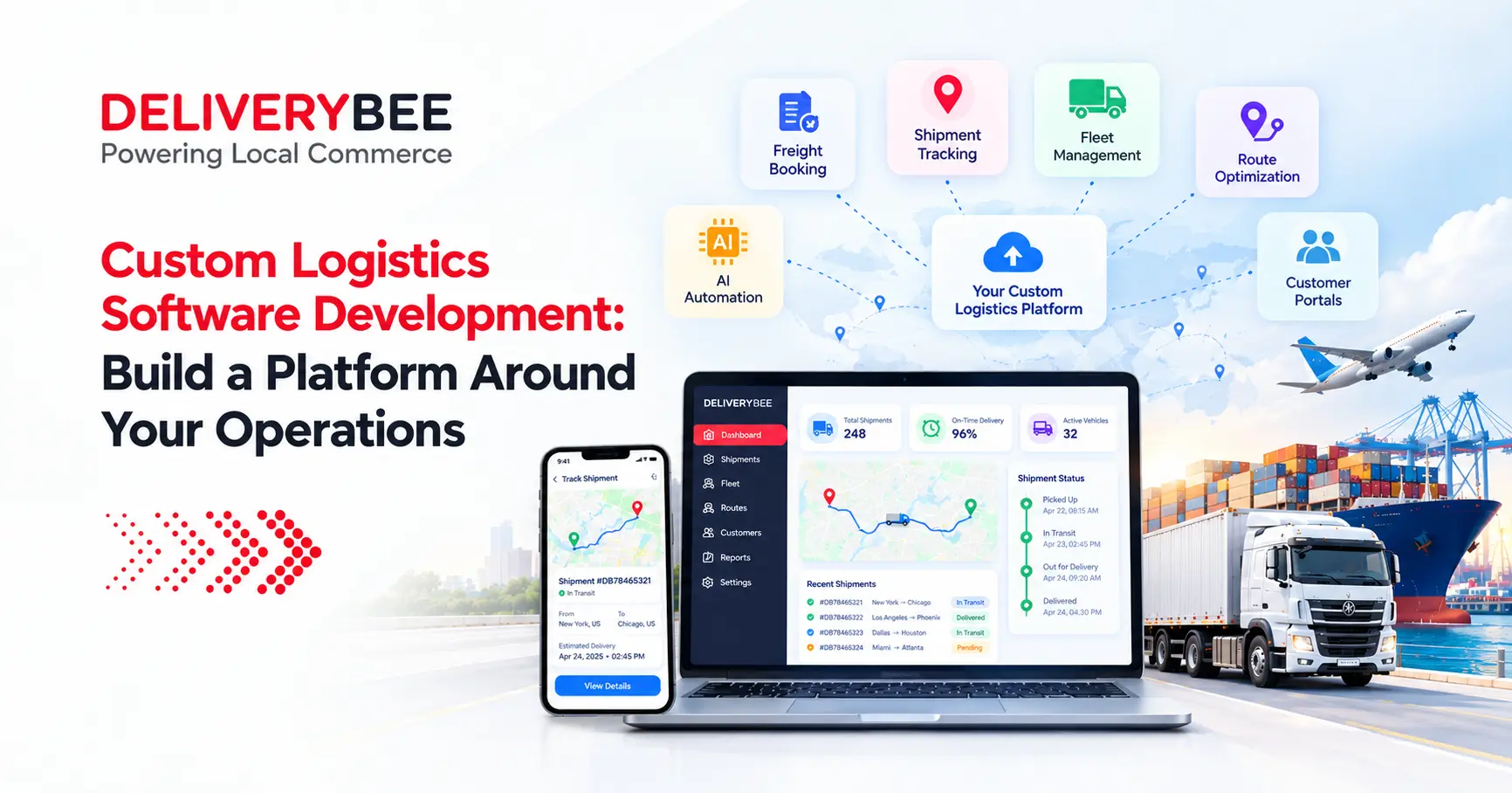
Custom logistics software is a web or mobile-based platform developed specifically for a logistics company’s workflows.
It can include:
- Freight booking
- Shipment management
- Customer management
- Fleet management
- Driver management
- Route optimization
- Shipment tracking
- Warehouse coordination
- Carrier management
- Digital proof of delivery
- Billing
- Analytics
- AI automation
The exact functionality depends on the business.
Why Logistics Companies Need Custom Platforms
A logistics company’s competitive advantage often exists in its processes.
For example, a freight forwarder may have unique quotation rules.
Another company may specialize in project cargo.
Another may manage multi-country transportation.
Another may provide specialized door-to-door services.
Generic software may not support these workflows without compromises.
Custom development provides greater control over:
- Business rules
- User roles
- Pricing
- Workflows
- Integrations
- Customer experience
- Automation
- Reporting
Building a Freight Forwarding Platform
A custom freight forwarding platform can begin with the customer journey.
Step 1: Request a Quote
The customer provides:
- Origin
- Destination
- Cargo type
- Weight
- Volume
- Container requirements
- Transportation mode
Step 2: Quote Management
The logistics team reviews the request and prepares pricing.
Step 3: Shipment Booking
The customer accepts the quotation.
The booking becomes an active shipment.
Step 4: Documentation
Documents are uploaded and connected to the shipment.
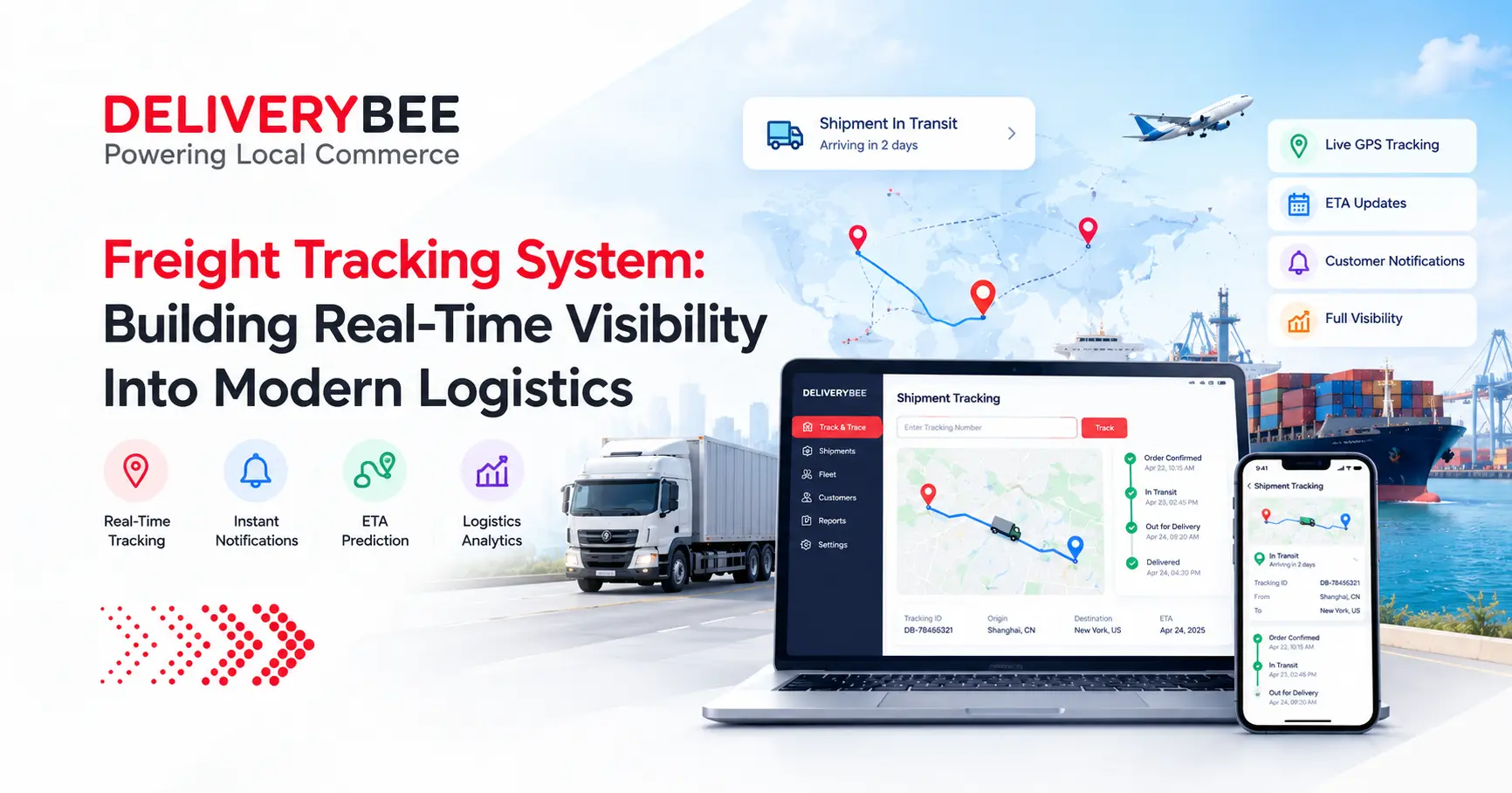
Step 5: Shipment Tracking
Customers can monitor shipment progress.
Step 6: Delivery
The final delivery is completed and proof of delivery is captured.
This creates an end-to-end digital workflow.
Mobile Applications for Logistics
A logistics platform should not necessarily be limited to a desktop dashboard.
Mobile applications can be developed for different users.
Customer App
Customers can:
- Book shipments
- Track cargo
- Receive notifications
- View documents
- Contact support
Driver App
Drivers can:
- View assigned trips
- Navigate routes
- Update shipment status
- Capture proof of delivery
- Upload photographs
- Capture signatures
Operations App
Operations employees can monitor shipments and manage exceptions while away from their desks.
Logistics Admin Dashboard
The administrative dashboard becomes the operational center.
It can provide:
- Shipment overview
- Customer management
- Driver management
- Vehicle management
- Carrier management
- Pricing
- Service zones
- Reports
- Payments
- Notifications
Management can also access business analytics.
Integrating AI
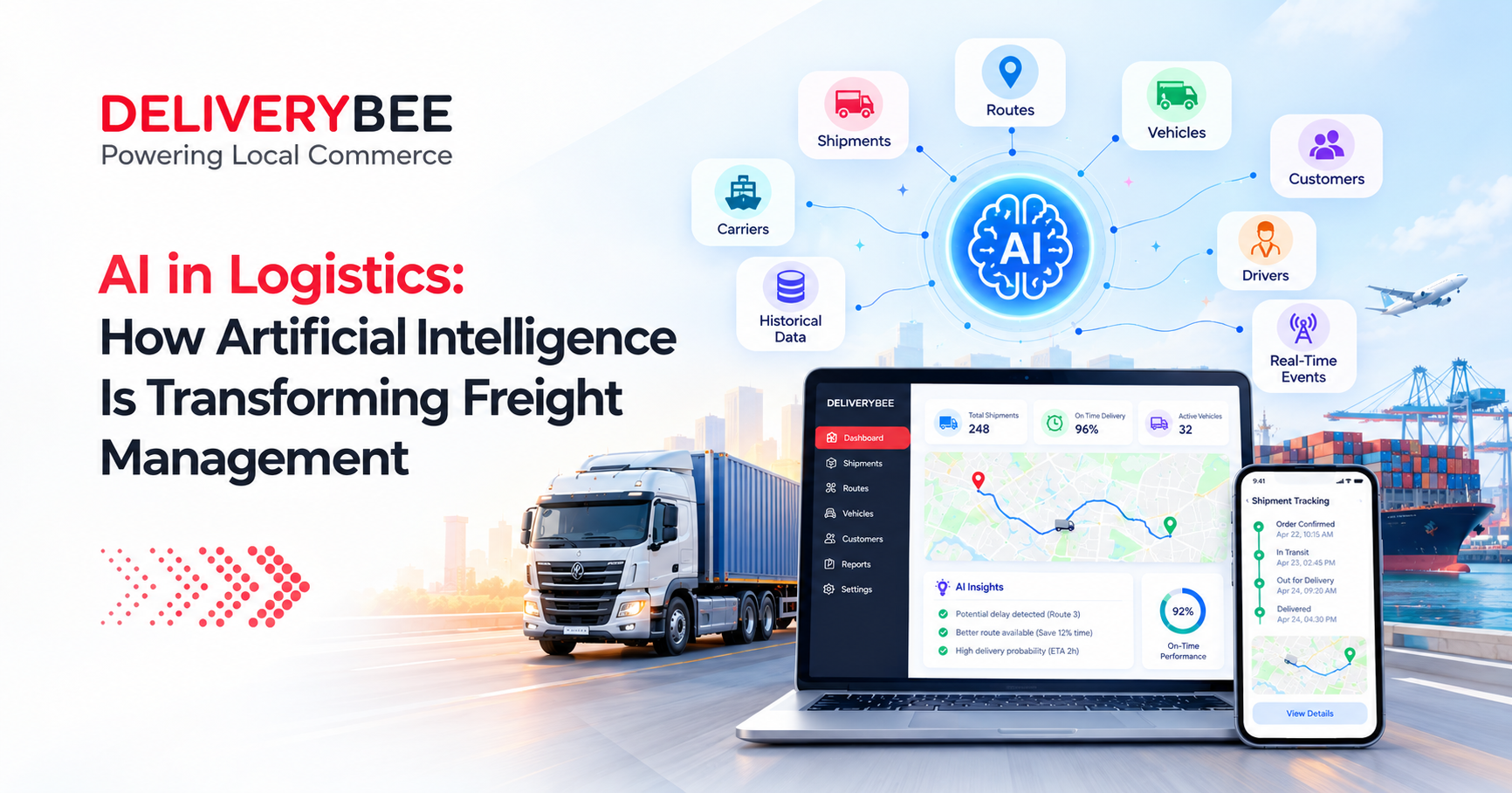
Custom logistics software provides an opportunity to introduce AI at the architecture level.
Instead of adding AI later, businesses can identify automation opportunities during initial planning.
Potential AI modules include:
AI Route Optimization
Optimize transportation routes according to business constraints.
Predictive ETA
Estimate delivery times using live and historical information.
AI Delay Detection
Identify shipments that may miss expected milestones.
AI Document Processing
Extract information from logistics documents.
AI Customer Assistant
Answer common shipment and booking questions.
AI Analytics
Identify patterns across shipment volumes, delays, costs and transportation performance.
DeliveryBee’s Approach to Logistics Software Development
DeliveryBee develops both custom and white-label applications.
Its current application-development offering covers web and mobile platforms and supports technologies such as Laravel, Node.js, Python, Flutter and React Native.
For logistics businesses, this can support development of:
- Freight forwarding software
- Transportation management systems
- Courier platforms
- Shipment tracking applications
- Fleet management systems
- Logistics marketplaces
- Driver applications
- Customer portals
White Label vs Custom Logistics Software
Businesses generally have two approaches.
White Label Logistics Platform
A white-label solution provides a ready-made foundation.
This can be useful when the business wants to launch quickly.
DeliveryBee’s courier platform, for example, provides customer, delivery agent, dispatcher and admin applications and includes functionality such as shipment booking, tracking, route optimization, fleet management and analytics.
Custom Logistics Software
Custom development starts with the company’s requirements.
This is more suitable when the business needs:
- Unique workflows
- Advanced integrations
- Complex pricing
- Specialized transportation
- Custom dashboards
- AI capabilities
- Enterprise integrations
The two approaches can also be combined.
A company can begin with a white-label foundation and customize it as its operations grow.
SailOn Logistics: From Logistics Services to Digital Experience
DeliveryBee has already provided a solution for SailOn Logistics, demonstrating how a freight and logistics business can strengthen its digital customer experience.
SailOn’s services include ocean freight, land freight, customs clearance, project cargo, warehousing and container transportation.
Its digital journey includes online freight quotation, shipment planning and tracking.
This illustrates an important principle:
Logistics software should connect the customer experience with the operational workflow.
A website should not simply describe logistics services.
It can become an entry point into the actual logistics operation.
APIs and Third-Party Integrations
Modern logistics platforms rarely operate in isolation.
Custom logistics software can integrate with:
- GPS providers
- Mapping platforms
- Payment gateways
- ERP systems
- CRM platforms
- Carrier APIs
- Warehouse systems
- Accounting software
- Communication platforms
API integration can help eliminate duplicate data entry.
For example:
Customer booking → Logistics system → Carrier → Tracking → Customer notification
The information can flow through the connected ecosystem.
Analytics and Business Intelligence
A custom logistics platform should also provide management intelligence.
Important metrics can include:
- Shipment volume
- Delivery performance
- Average transit time
- Carrier performance
- Route performance
- Customer activity
- Revenue
- Operational costs
- Delays
- Failed deliveries
These reports can help management understand the performance of the logistics operation.
Security and Scalability
Logistics systems contain sensitive commercial and customer information.
A production platform should therefore consider:
- Role-based access
- Authentication
- Encryption
- Secure APIs
- Backup
- Audit logs
- Cloud infrastructure
- Monitoring
- Disaster recovery
Scalability should also be considered from the beginning.
A system that handles 100 shipments today may need to handle 100,000 tomorrow.
How to Start a Logistics Software Project
A successful logistics application should begin with discovery.
The development team should understand:
1.How shipments enter the system
2.Who manages them
3.How pricing works
4.How transportation is assigned
5.How shipments are tracked
6.How customers receive updates
7.How delivery is confirmed
8.Which systems need integration
9.Which processes should be automated
10.Which AI capabilities would provide genuine business value
From there, the project can be divided into MVP and future phases.
Build the Logistics Platform Your Business Actually Needs
The future of logistics belongs to connected platforms.
Freight booking, shipment tracking, fleet management, customer communication, analytics and AI should not exist as isolated tools.
They should work together.
That is the real opportunity behind custom logistics software development.
Whether you are a freight forwarder, 3PL provider, courier company, transportation business or logistics startup, the right technology platform can turn complex operational workflows into a connected digital experience.
DeliveryBee can help transform that operational requirement into a scalable web and mobile logistics platform—from the first shipment booking to tracking, delivery and AI-powered optimization.