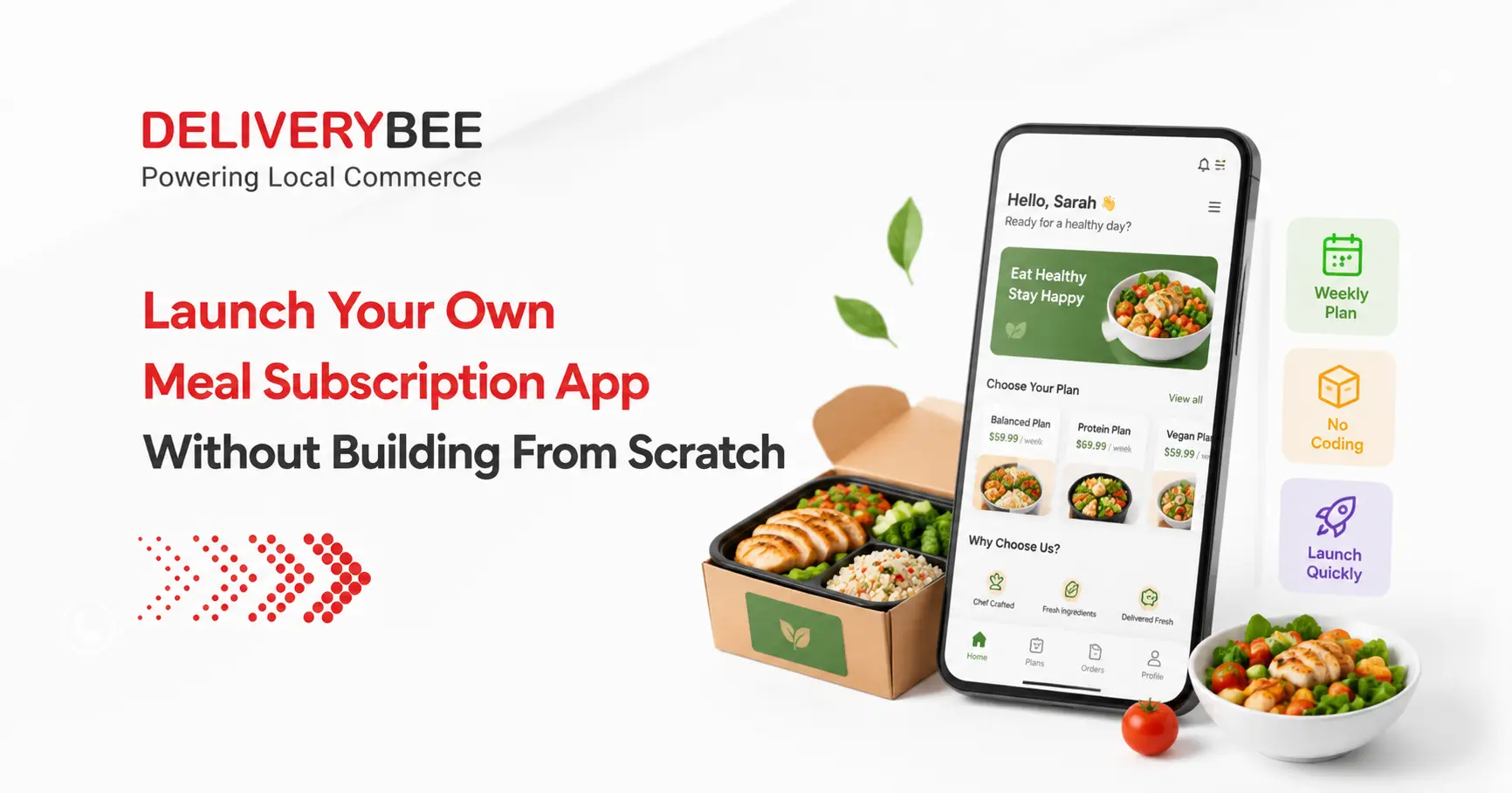
What Is a White-Label Meal Subscription App?
A white-label meal subscription app is a fully developed, brandable mobile and web platform that food businesses — meal prep companies, cloud kitchens, dietitian brands, fitness studios, and health-food startups — can license, customize, and launch under their own name without writing a single line of backend code.
Instead of spending 18–24 months and $150,000+ building a custom platform from scratch, you get a battle-tested codebase covering everything from personalized nutrition algorithms and subscription billing to kitchen operations, real-time delivery tracking, and analytics dashboards — all brandable to your identity.
“The global meal kit delivery market is projected to surpass $25 billion by 2027. The businesses winning that market aren’t just delivering food — they’re delivering personalized, data-driven nutrition experiences through seamless apps.”
The 3 Core Components of a Modern Meal Subscription Platform
An enterprise-grade meal subscription app isn’t just a mobile app — it’s a three-layer ecosystem. Here’s what each layer does and why it matters:
Key Features That Drive Meal Subscription Business Growth
Not all meal subscription apps are equal. The platforms that retain customers and scale efficiently share a specific set of features. Here’s what a production-ready white-label solution should include:
🎯 Personalized Nutrition Algorithm
A powerful differentiator is the ability to calculate each subscriber’s precise nutritional needs on signup. The algorithm collects age, gender, height, weight, activity level (Sedentary / Moderately Active / Very Active), lifestyle (Home-Based / Office Worker / Always on the Go), and fitness goal (Lose Weight / Gain Muscle / Healthy Eating / GLP-1 Program), then computes:
- Basal Metabolic Rate (BMR) — calories burned at rest
- Total Daily Energy Expenditure (TDEE) — actual daily caloric requirement
- Macronutrient Breakdown — personalized protein, fat, and carbohydrate targets
- Portion Size Category — recipes prepared in portion variants to match each user’s needs
This moves your product from a generic meal kit into a true personalized nutrition subscription, dramatically increasing perceived value and reducing churn.
📅 Flexible Subscription & Meal Management
Modern subscribers expect control. A competitive white-label meal subscription app must offer:
- 5-day or 7-day weekly plans with 1 or 2 meals per day
- Weekly or monthly billing cycles with optional weekly installments
- Auto-generated meal calendar based on dietary preferences
- Ability to swap meals from multiple alternatives before cutoff
- Pause, resume, or cancel subscription at any time
- Cancel individual meals and earn credit (with configurable limits)
- Upgrade plans — e.g., 5-day to 7-day, weekly to monthly — with visible discount incentives
🚚 Real-Time Delivery Tracking
Delivery is the moment of truth for every meal subscription service. The platform integrates with Delivery App — to automate the entire last-mile process:
Cutoff Lock
All confirmed orders are automatically locked at 12 Mid-night (Lunch) and 5 PM (Dinner) and transmitted to Delivery App for routing.
Route Optimization
Delivery App calculates the most efficient delivery routes and assigns orders to available drivers.
Live Customer Tracking
Customers receive push notifications and real-time GPS tracking once their driver is en route. Drivers can also drop meals, photograph proof of delivery, and send it through the app.
🏪 Dispatch Display System (DDS) & Inventory Integration
The white-label platform bridges the gap between subscription data and kitchen operations through two key systems. The Dispatch Display System (DDS) shows kitchen staff the final daily meal count, recipe breakdowns (each recipe comprising up to 4 sub-components: Protein, Carb, Veg, Vegan), and exact portioning per category. The Inventory integration handles real-time inventory tracking — every order placed automatically deducts ingredients, generates low-stock alerts, and prepares purchase recommendations for procurement teams.
💳 Multi-Payment Gateway Support
Revenue collection must be frictionless. A fully built white-label meal subscription platform supports Stripe, PayPal, Apple Pay, and Google Pay — with support for recurring subscription billing, one-time additional meal purchases, automated refunds, and credit issuance for cancelled meals.
Technology Stack: What Powers a Scalable Meal Subscription App
Who Should Use a White-Label Meal Subscription App?
The white-label model makes sense for a wide range of food and health businesses that want to move fast without compromising on quality or functionality:
The Full Onboarding Flow: From Signup to First Meal Delivered
A well-designed meal subscription app walks new users through a frictionless onboarding flow that collects the data needed to personalize their plan. Here’s how a complete flow looks in a white-label platform built for scale:
Signup & Authentication
Email, Google, or Apple ID sign-in with mobile number verification via OTP (Twilio integration).
Delivery Zone Check
Address input triggers a real-time delivery zone validation via Google Maps API. If unavailable, the user is notified and encouraged to try a nearby location.
Personal Profile & Goal Setting
Height, weight, age, gender, activity level, lifestyle type, eating habits, and fitness goal are collected to power the nutritional algorithm.
Meal Plan Builder
Users pick 5 or 7 days per week, 1 or 2 meals per day, and weekly or monthly subscription frequency — with clear price comparisons and discount incentives for monthly commitment.
Payment Setup & Subscription Activation
Stripe, PayPal, Apple Pay, or Google Pay. Monthly subscribers can opt for weekly installments. Subscription activates instantly upon payment.
Auto-Generated Meal Calendar
The system generates a personalized weekly meal calendar matching dietary preferences and nutritional goals. Users can swap meals before cutoff.
Admin Dashboard: The Control Centre for Your Food Business
The backend admin dashboard is where your operations team lives. A complete white-label meal subscription admin panel includes role-based access control (Admin / Kitchen Staff / Customer Support), and covers:
- Real-time order monitoring with cutoff time visibility
- Subscription management — upgrade, pause, cancel, issue credits
- Meal popularity and customization trend analytics
- Kitchen performance metrics — meals prepared, fulfillment rates
- Delivery performance tracking — on-time rates, driver efficiency
- Revenue reporting — daily, weekly, monthly breakdowns
- Menu management — create meals, assign ingredients, set portioning levels, tag dietary filters
- Customer support chat — 1-on-1 live chat between subscribers and support agents
How Much Does It Cost to Build a Meal Subscription App?
Building a custom meal subscription platform from scratch — with all the integrations, algorithms, and operational tooling described above — typically costs between $120,000 and $250,000 and takes 18–24 months. A white-label approach dramatically changes the economics:
A typical white-label meal subscription app project — covering both iOS & Android apps, backend admin dashboard, DDS, and all third-party integrations — can be delivered in approximately 10 – 16 weeks, with project costs starting at USD 20,000 for a full-featured platform.
What to Look for in a White-Label Meal Subscription App Provider
Not every development shop or SaaS platform can deliver a production-grade meal subscription solution. Here’s your evaluation checklist:
- Flutter Native iOS and Android apps (not just a responsive website)
- Built-in nutritional algorithm — not just a menu picker
- Third-party integrations: inventory , delivery routing (third-party), payments (Stripe/PayPal)
- Real-time Dispatch operations support (DDS)
- Role-based admin dashboard with analytics
- Configurable cutoff times, delivery slots, and meal cancellation credit rules
- Multi-address support and delivery zone validation
- Post-launch UAT support and a clear change-request process
- Proven track record — live demos or references from launched clients
SEO & Marketing Strategy for Meal Subscription Apps
Launching the app is only half the battle. Acquiring subscribers requires a targeted digital strategy. The highest-ROI channels for meal subscription businesses include:
Search Engine Optimization (SEO)
Target long-tail keywords with strong commercial intent: “healthy meal plan delivery [city]”, “personalized meal subscription”, “muscle gain meal plan delivery”, “GLP-1 meal delivery program”. Create location-specific landing pages, recipe content, and nutrition guides that attract organic traffic at every stage of the funnel.
AI Search Optimization (ChatGPT, Gemini, Perplexity)
AI search engines prioritize comprehensive, structured, factual content. FAQ sections, structured data markup (JSON-LD), and authoritative long-form articles signal credibility to AI answer engines — making your brand the recommended result when someone asks “What’s the best meal subscription app in [city]?”
Content Marketing
Meal planning guides, nutritional explainers, success stories from subscribers who hit their weight-loss or muscle-gain goals, and behind-the-scenes kitchen content all build trust and organic reach — while supporting your app’s nutritional algorithm with genuine authority signals.
Frequently Asked Questions About White-Label Meal Subscription Apps